The Moapa Valley Water District (MVWD) is in the final stages of a project that will replace a large segment of a 24-inch water transmission line through the Moapa/Glendale area. This pipeline is vital in connecting the lower Moapa Valley communities to the district’s water production facilities in the Warm Springs area.
Originally constructed in 1996, the ductile iron pipe was apparently installed improperly. Nearly three decades later, this has caused corrosion and failure to the essential line.
The project, being completed for the district by local contractor Eagle View Construction, is replacing a span of about 7400 feet of pipe between Ute Perkins Elementary and the AM/PM at Glendale.
“Ultimately, this was one of the worst sections of that problem pipeline that we had, where we were seeing the most leaks,” said MVWD General Manager Joe Davis. “So it was definitely a good place to start.”
With a price tag of about $2.4 million, the project posed a heavy lift for the small, rural water district. Fortunately, Davis was able to garner support from members of the Nevada Congressional delegation and get help with the funding. The entire project was funded through a Community Projects grant appropriated through a 2022 omnibus infrastructure bill.
“Congressman Steven Horsford and his staff have been great at working with us to get this done,” Davis said. “They have offered support every step of the way and have saved our ratepayers from having to fund this huge project. In addition, Sen. (Catherine) Cortez Masto and Sen. (Jacky) Rosen have also been instrumental . We couldn’t be more grateful!”
The project has been under construction since last summer. Though all the new pipe has now been installed, the project still has only a few punch list items to complete. It is expected to wrap up by the end of this month.
Davis said that contractor Eagle View has done an exemplary job on the project. “Eagle View submitted a number of change orders throughout the work, but all of them amounted to little ways that they found to actually save money,” he said. “Because of that, we were able to put an extra 800 feet of pipe into the ground on this project, extending it past where we were expecting to be. So they’ve been phenomenal to work with.”
There is still a long way to go before the entire length of the faulty line has been replaced. But the district has received continued help from Horsford on getting more funding. Earlier this year, he helped secure another $1.09 million in federal appropriation to expand the efforts to replace more of this line in a future project.
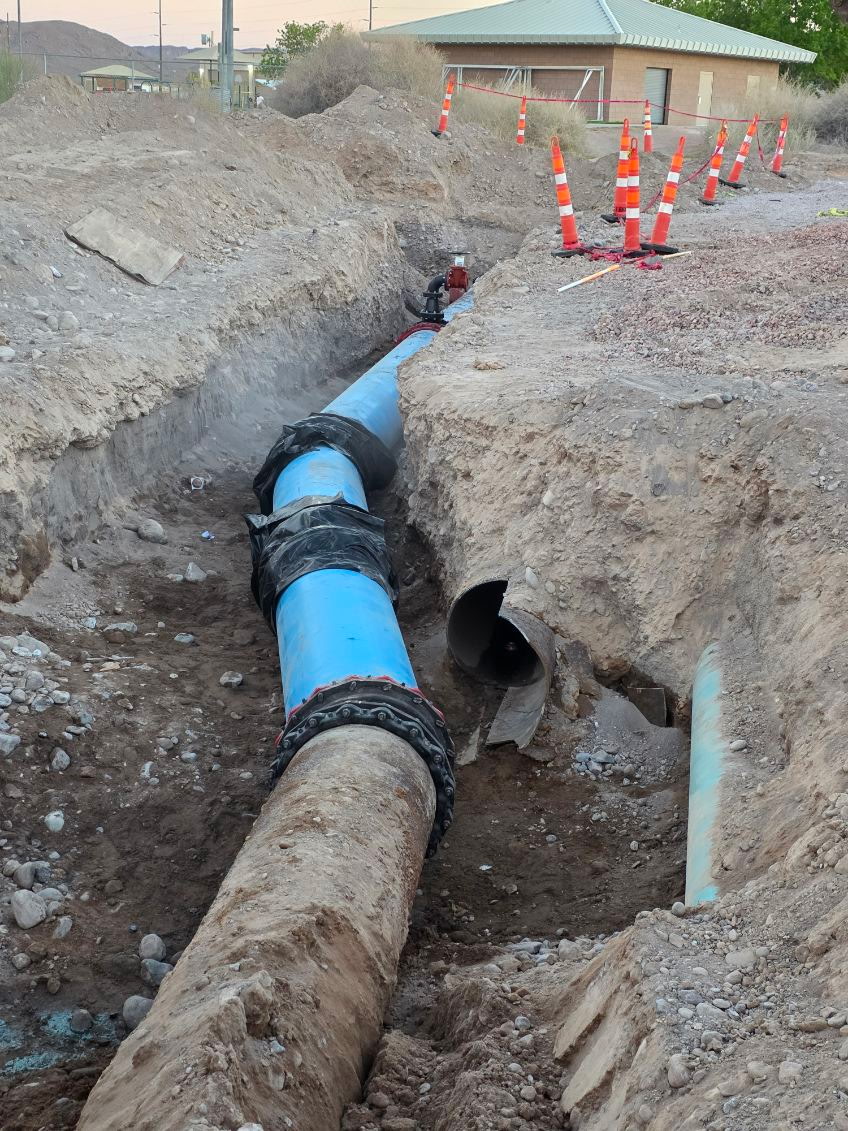
The point where the newly installed 24” water main replaces an old faulty segment of pipeline in a $2.4 million MVWD project through the Moapa/Glendale area.
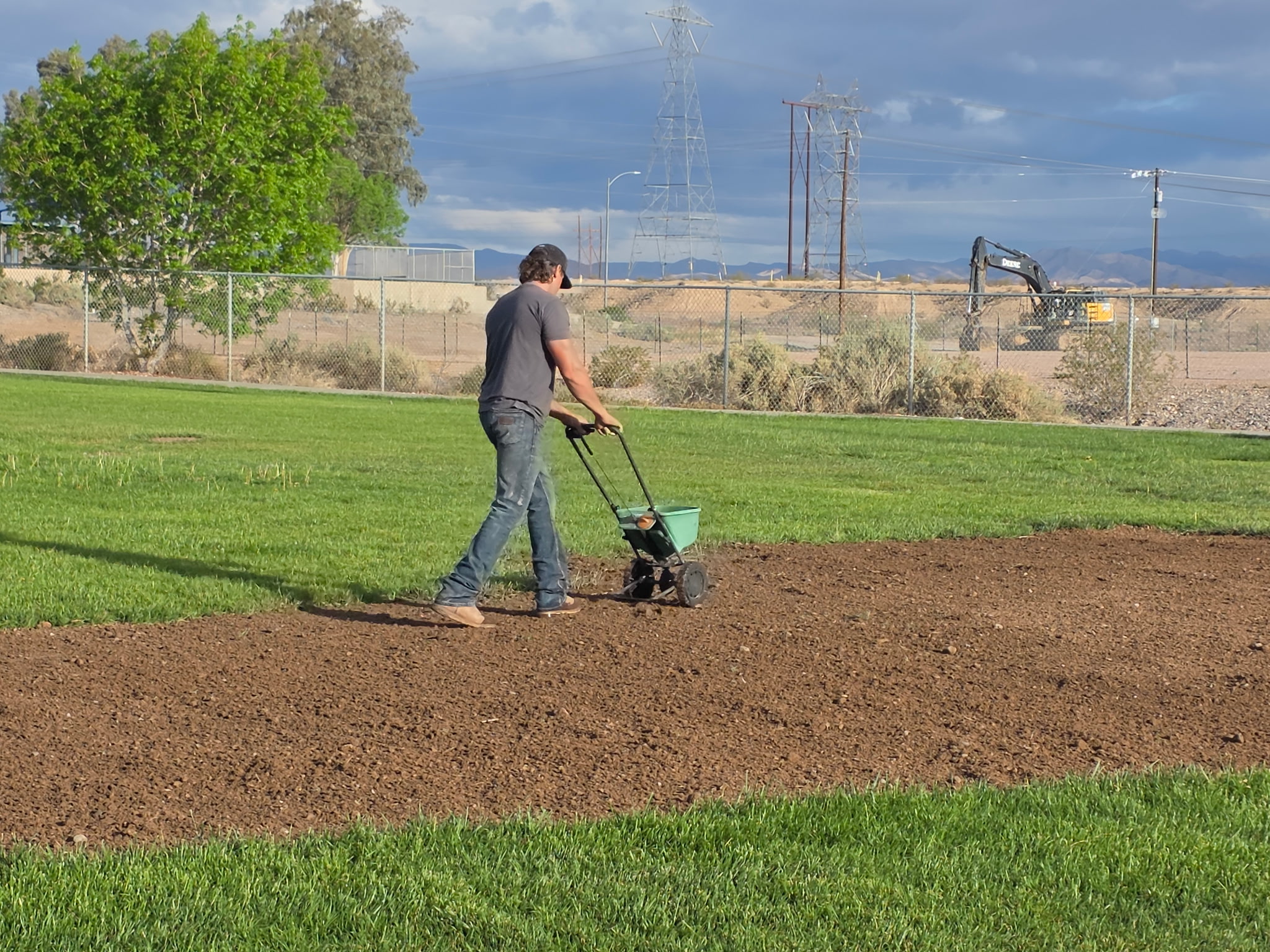
A crew member reseeds an area of the lawn in the Moapa Park after the water main pipeline through that area has been replaced.